

FDS Innovators: deadstock, ghosts and the strange
Fashion Design Studio at TAFE NSW has always occupied a particular place in Australian fashion: part school, part incubator, part early-signal system for where the industry might go next.
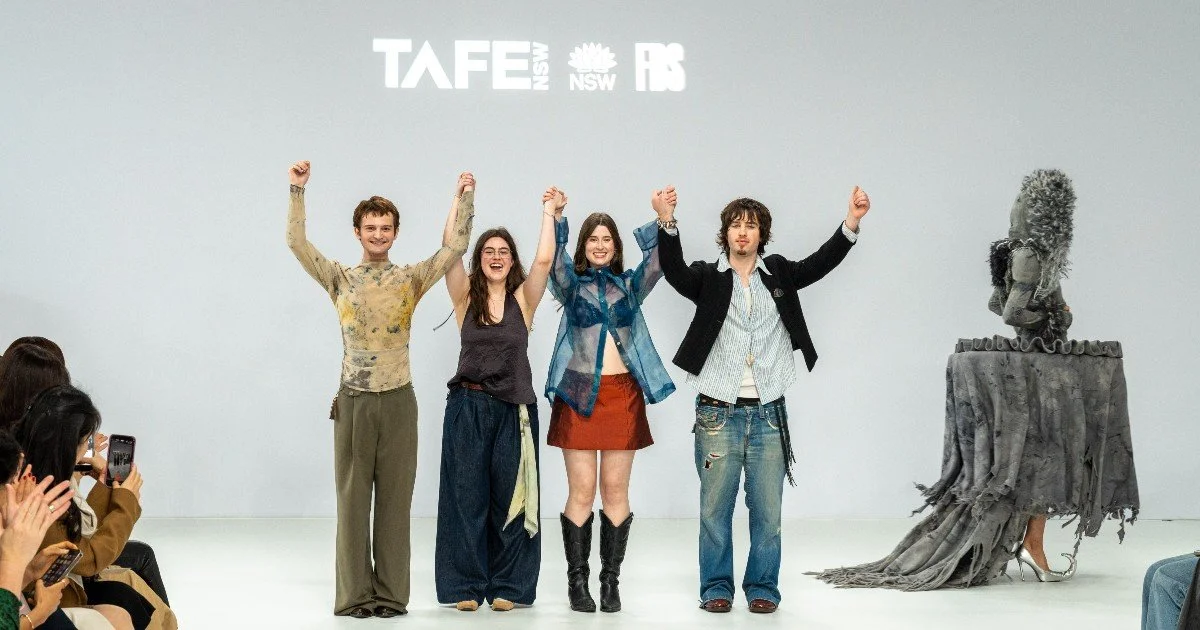
Photo Credit: FDS TAFE NSW
At Australian Fashion Week 2026, FDS: The Innovators - The Next Garde brought four emerging designers: Oliver Parry, Luke Rutherford-Durney, Tate Boswarva and Zoe Markopoulos.
True to name, The Innovators made the showcase compelling through each designer having a totally different idea of sustainability.
We had cloth like inheritance, deadstock like mythology, waste like a lab experiment, ageing like a luxury code.
Texture, erosion, memory, myth, waste, handwork and the body as something clothes move with. The designers were asking bigger questions about material life, memory, waste, fantasy, labour and emotional durability, and all the nuances that will move art. Each representation was personal, deep rooted and dramatic.
Oliver Parry
Oliver Parry’s collection was a poetic visual language of circularity: garments as relics, surfaces as records, deterioration as intimacy. His practice centres ritual, inherited materials, natural dyeing and the transformation of collected fibres from previous owners into new garments.
Reclaimed quilts, sheets, and tablecloths that were buried underground to then be resurfaced and recoloured by earth, weather and mineral-rich natural dyes in billowing silhouettes, a regal representation of regeneration. Dramatic and provocative, they looked like they had been through something, and were better for it. Like human beings themselves.
There was a tenderness and drama to the mess of what once was. Loose layers, tattered edges, rope, netting, beads and bruised colour made the clothes feel ceremonial without being precious. Like garments found in the back room of a house where everyone had left in a hurry, then returned years later with better taste.
A refreshing backlash to the pressures of quick solutions, the collection made circularity feel intimate rather than efficient. These weren’t rescued textiles made respectable again in whatever form can be monetised, but fabrics allowed to carry evidence of where they had been.
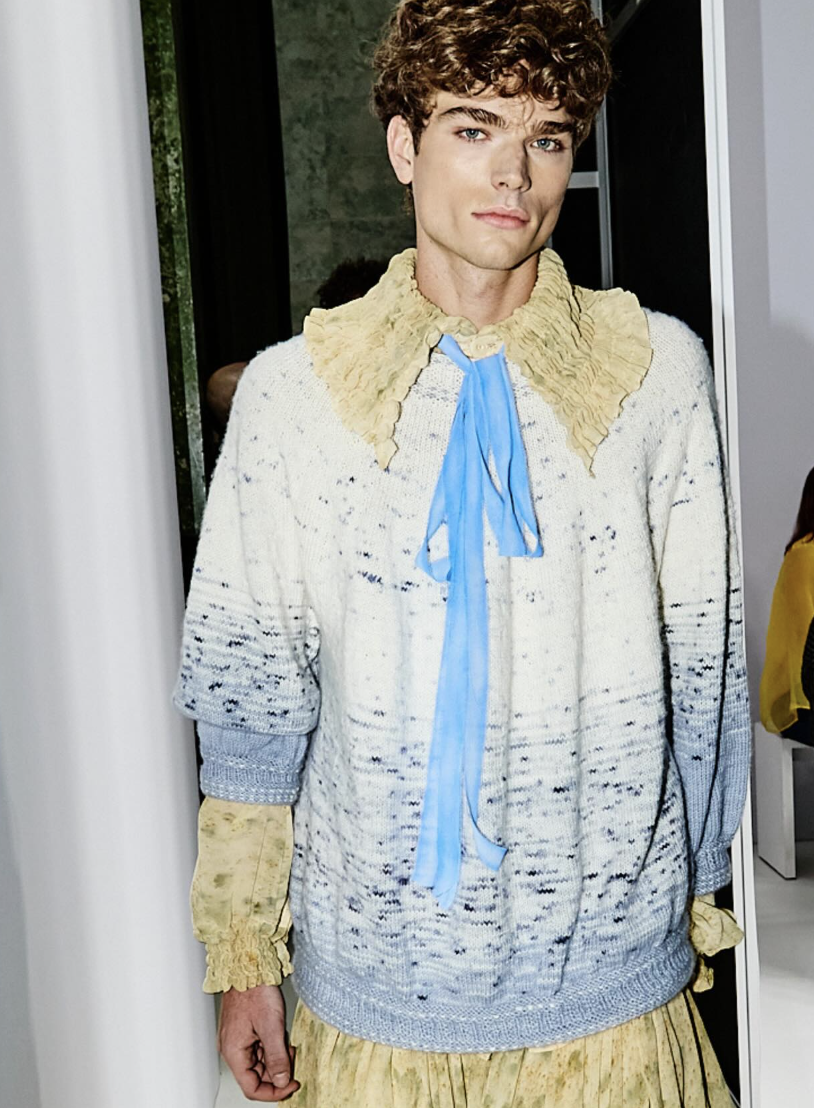
Photo credits: @sonnyphotos
Luke Rutherford-Durney
Luke Rutherford-Durney’s Luke Rubén is anchored in building worlds and the complexities within them. Fantastical and mythical, intrigue of knights, jesters, warriors, maybe asking who is who through modern interpretation.
Through a combination of ethereal, bound and streetwear-like silhouettes, Luke Ruben draws on ideas of duality, transition and strange beauty. His own brand language is rooted in world-building, mythology and a tension between romanticism and rebellion.
Deadstock and upcycled textiles are almost obnoxious evidence of a world already lived in. The weight of living felt true - one model in dressed in frayed liberation, fists clenched and head burdened in thick hunting gloves and hunting hat, as if a medieval Holden Caulfield lumbering through the MCA. Hooded, structural jackets, vision only part-permitted through long, oscillating streams of fabric.
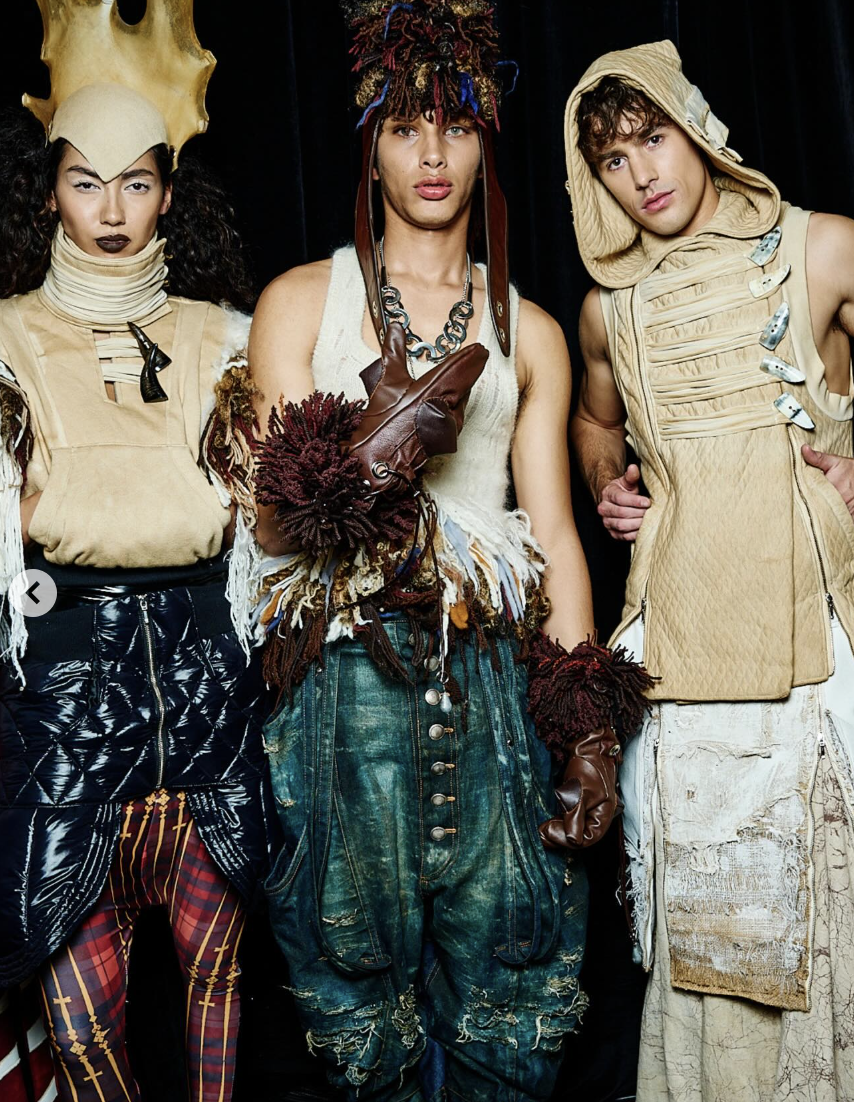
Photo credits: @sonnyphotos
The sustainability here wasn’t soft. It felt burdened, theatrical and slightly unhinged in the best possible way. A reminder that working with existing materials doesn’t have to mean restraint. It can mean building an entire world from leftovers and letting the leftovers look powerful.
The message felt as though we have so much freedom to create and be, but such obscurity in how to place a vision in a time of complexity and resource scarcity.
Tate Boswarva
Tate Boswarva’s Attè brought one of the most technically charged collections in the showcase. An seeming ode to the seventies decade, a combination of glamour, deconstruction, buoyant movement, a juxtaposition of freedom and complex restriction. It looked like a very glamorous science experiment that had escaped supervision.
Fashion Journal reported that Tate’s 12-look collection, Vestige, was constructed entirely from recycled materials, including 16 pairs of denim jeans, recycled glass, discarded plastic garment bags, deadstock fabrics and seven upcycled Dissh pieces, finished using natural dye processes.
The visual sustainability language was not neat. It was messy, engineered, tactile and process-led. The runway had a restless, experimental energy. laser-cut denim reconstructed into new surfaces, cyanotype-dyed silks, resin-like structures, sheer inserts, organza, tailoring, hand-blown glass and custom beading made from contraception blister packs.
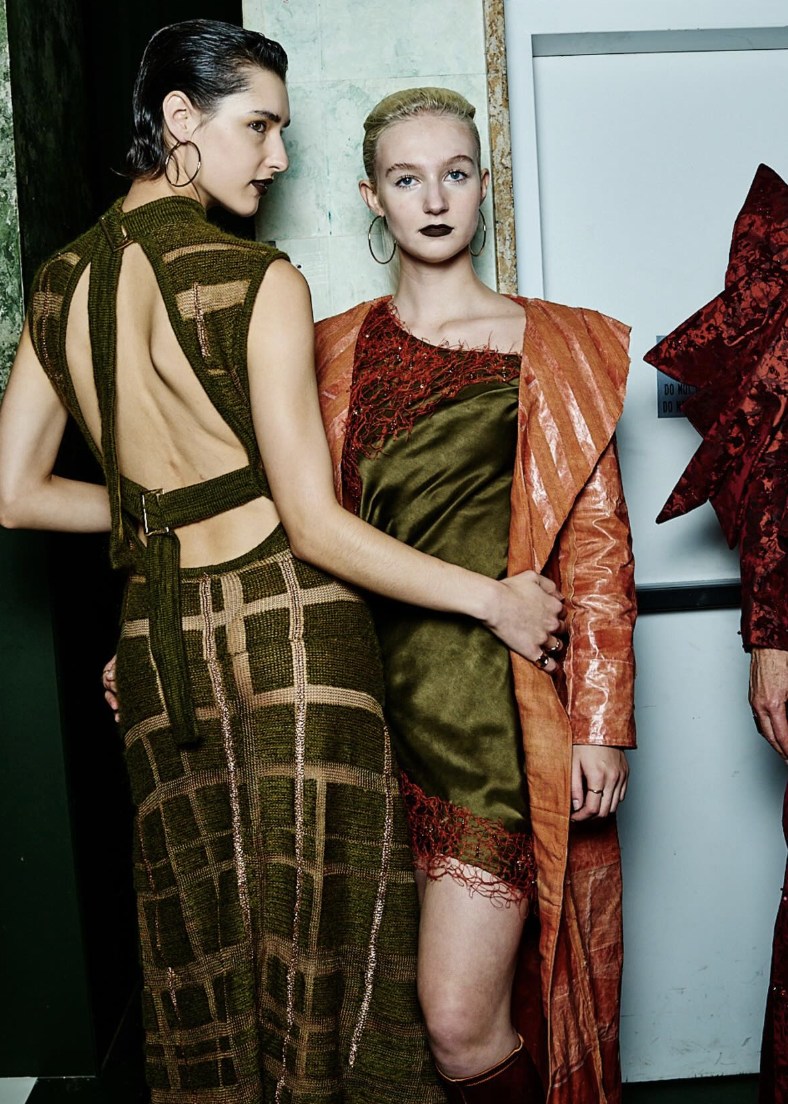
Photo credits: @sonnyphotos
Zoe Markopoulos
Zoe Markopoulos’ Marko moved through time, permanence and transformation. Her debut collection, Patina, explored the way garments evolve through wear, environment and touch, drawing from copper oxidisation and the landscapes of the New South Wales South Coast.
Rich tones, blue-green surfaces felt like an ode to the alchemy of coastal lines. Scale-like discs oozed the elegance and diversity of movement, leather, tassels and laser-cut structures presenting fluidity and rigidity all at once. This created clothing that washed, clinked, and rustled through time on the runway, an amalgamation of its inspiration.
It was an absolute rejection of disposable perfection - material change and the natural aging process enhancing value and interest. Materials are not something to be corrected - but objects that can age, record and transform with the wearer.
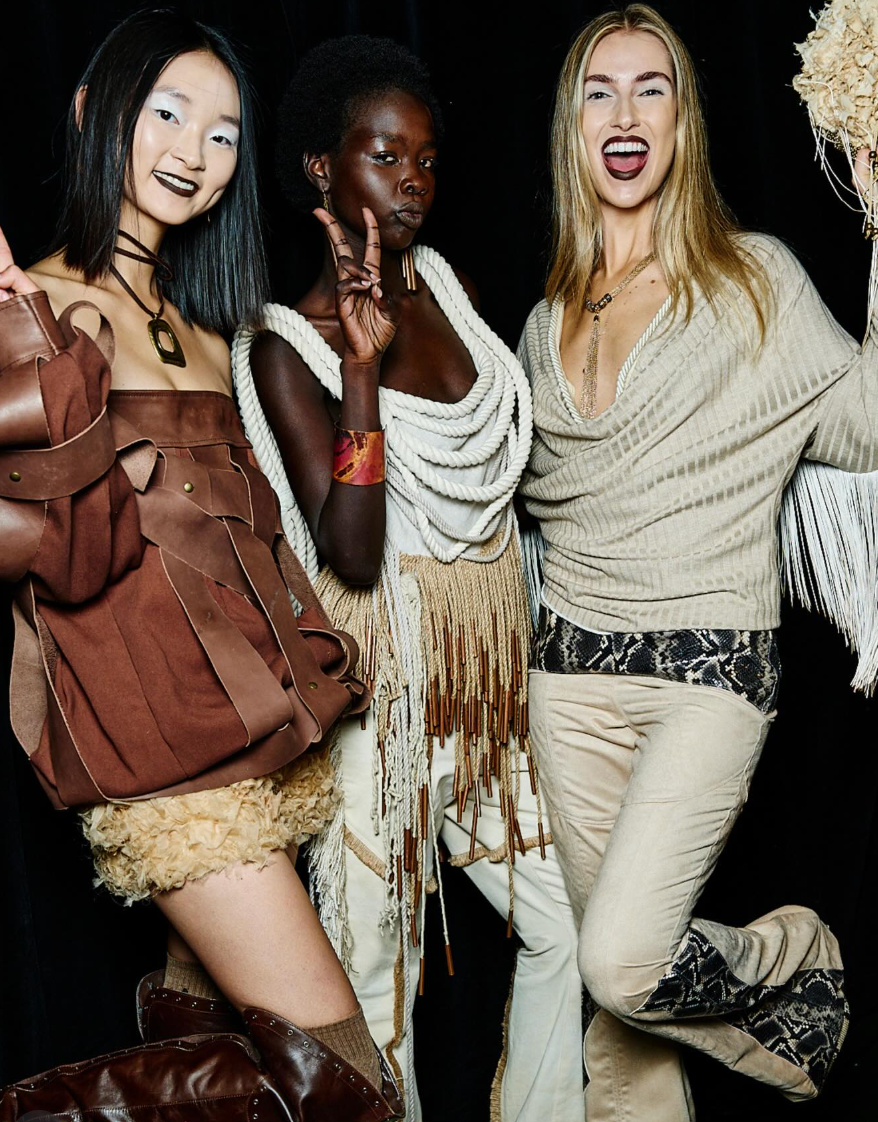
Photo credits: @sonnyphotos
FDS’s Next Garde incubator is designed to support emerging designers through mentorship across sustainability, local manufacturing, ecommerce, media training and business skills.
It made sustainability strange and sometimes uncomfortable. It let material histories stay visible. It let waste become fantasy. It let decay become seductive. It let garments sound, drag, stain, rustle and remember.
We need designers to move beyond sustainability as a polished claim - willing to treat limitations as language. - a real creative condition.
And at FDS, that condition looked alive.
Find more of our Australian Fashion Week breakdowns here.